




Cloudpick helps the discount retail giant launch a campus unmanned store, solving low margins and labor costs with grab‑and‑go technology while building a digital user base.


-
Customer Requirements
-
Cloudpick Solution
-
Result
-
Customer Testimonial
Japan Don Quijote: Why Discount Retail Starts with a Campus Unmanned Store?
Customer Requirements
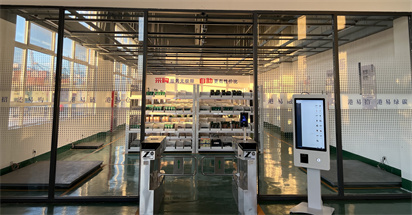
Inside the campus of Osaka Electro‑Communication University, an unusual store catches your eye. No checkout counter, no queues, no staff. Students scan to enter, pick up items, turn around and leave – checkout is fully automatic, done in under a minute. This is the latest “Campus Don Quijote” unmanned store, the first smart unmanned shop launched by Japan’s famous discount retailer Don Quijote in partnership with Cloudpick.

Since its founding in 1989, Don Quijote has stuck to the philosophy of “convenience + discount + entertainment,” offering a treasure‑hunt style shopping experience. The company now operates over 600 stores in Japan and has expanded overseas. Facing more fragmented consumer demand, Don Quijote has begun exploring smaller, more flexible store formats, creating two complementary discount logics: large‑format MEGA Donki and small‑format Donki.
Opening one large store costs as much as opening 30–60 small Donki stores. Small stores offer shorter payback periods, higher sales per square meter, and lower risk.
Next, Don Quijote chose to test this small‑store model on a university campus. University campuses are high‑frequency consumption scenarios, but many retailers avoid them: students buy often but with low average ticket size, making profitability hard. Campus stores have limited space yet high labor costs, and demand fluctuates wildly around class schedules. In short, serving the campus market used to be an unprofitable business.
Cloudpick Solution

Cloudpick’s smart technology tackles each pain point of campus retail.
1. Pain point: Small space, low sales per square meter, hard to profit
Cloudpick’s AI‑powered store uses computer vision and weight sensors for automatic item recognition. Customers grab and go – no cashier or extra staff needed. The space saved is used to display more products, boosting sales per square meter and margins.
2. Pain point: Peak‑hour congestion, poor experience
Cloudpick’s smart checkout means almost no queues. The entire shopping process – from entry to exit – takes less than one minute, greatly improving throughput and satisfaction during busy hours.

3. Pain point: High labor cost, low efficiency
Unmanned operation cuts labor costs by over 85%. Remote backend monitoring and smart restocking raise efficiency and enable 24/7 operation.
More importantly, Cloudpick’s store creates valuable digital user touchpoints. By scanning a QR code and linking their LINE account, customers become private‑domain users. Retailers can then engage them through LINE mini‑programs with targeted promotions, personalized recommendations, loyalty events, and even ticket sales or online malls – raising customer lifetime value (LTV) and turning traffic into retention.
“Campus Don Quijote” is not only Don Quijote’s first smart unmanned store on campus; it’s also an innovative industry‑academia collaboration. Using the user data collected, Don Quijote works with the university to analyze student preferences, price sensitivity, and product innovation needs.
This data helps develop next‑generation products tailored to young consumers, adding extra value. The store becomes a testing ground and data hub, not just a convenience shop.
Result
From one simple calculation to a campus unmanned store, and now to a win‑win industry‑academia model, Don Quijote and Cloudpick have proven that the future of discount retail lies not in bigger stores, but in more flexible scenarios, smarter technology, and deeper customer insights.
“Campus Don Quijote” solves the profitability and operational challenges of campus retail. It allows Don Quijote to enter the high‑frequency youth market, creates added value through user data and product innovation, and offers a replicable, scalable model for the entire industry.
To further validate sustainability and scalability, Don Quijote’s parent company PPIH plans to open a second “Campus Don Quijote” in November 2025, and aims to deploy 5–10 stores over three years, moving from pilot to brand‑level scale.
“Campus Don Quijote” operates independently from traditional Donki and MEGA Donki – no conflict of resources or scenarios. It focuses on the young, high‑frequency customer base that larger formats don’t reach, complementing Don Quijote’s overall brand presence.
Customer Testimonial
A representative from Don Quijote’s parent company PPIH said:
“The future of discount retail is not necessarily in bigger stores, but in more flexible scenarios, smarter technology, and data that truly understands users. Starting with a campus unmanned store, we have verified the feasibility and replicability of the small‑store model on campus. We will continue our cooperation with Cloudpick, opening a second ‘Campus Don Quijote’ in November 2025, and plan to deploy 5–10 stores within three years, turning this model from a pilot into a scalable brand.”
